The 2026 Shift Towards Sustainable Living
The Indian real estate landscape is undergoing a profound transformation as we move through 2026. The traditional metrics of luxury—sprawling square footage and imported marble—are rapidly being replaced by a new gold standard: sustainability. Today's high-net-worth individuals (HNIs) and environmentally conscious millennials are driving the demand for "Green Homes" that offer a lower carbon footprint, energy efficiency, and a closer connection to nature.
This paradigm shift is not merely a passing trend; it is a fundamental restructuring of how developers conceptualize, construct, and market properties across India's top metropolitan areas, including Mumbai, Bengaluru, and Pune.
The Rise of IGBC and LEED Certifications
A few years ago, green building certifications were seen as a niche luxury or a corporate PR exercise for commercial buildings. In 2026, they have become a strict prerequisite for premium residential projects. Certifications from the Indian Green Building Council (IGBC) and Leadership in Energy and Environmental Design (LEED) are heavily prominently featured in marketing brochures.
Homebuyers are actively looking for Platinum or Gold-rated buildings because they understand the tangible benefits. These certifications guarantee superior indoor air quality, substantial savings on electricity and water bills, and a higher resale value. Developers who fail to secure these certifications are increasingly finding their projects completely ignored by the premium buyer segment.
Key Features of 2026's Sustainable Homes
1. Advanced Energy Independence
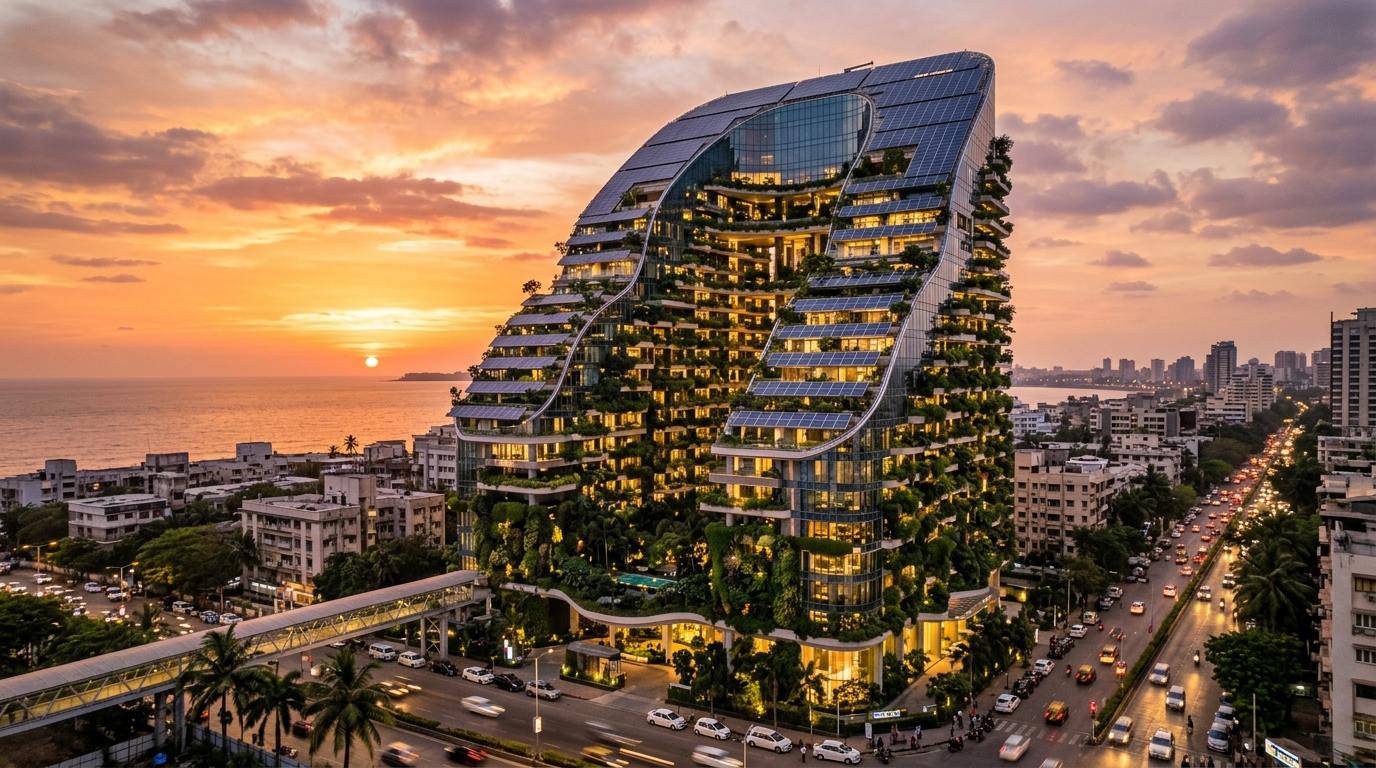
Modern luxury complexes are no longer entirely dependent on the grid. We are seeing massive integrations of advanced building-integrated photovoltaics (BIPV)—solar panels that serve as the actual facade or roofing materials. Combined with smart-grid battery storage systems in the basement, many new luxury complexes can run their common areas, elevators, and clubhouses entirely on renewable energy.
2. Water Positivity and Zero Liquid Discharge
With water scarcity becoming a critical issue in cities like Bengaluru and Chennai, "Water Positive" architecture is the new necessity. This involves advanced rainwater harvesting pits that recharge the local aquifers, coupled with state-of-the-art Zero Liquid Discharge (ZLD) sewage treatment plants. The treated water is recycled entirely for landscaping, flushing, and car washing, ensuring zero dependence on municipal water for non-potable uses.
3. Vertical Forests and Biophilic Design
Perhaps the most visually stunning aspect of the 2026 green revolution is the adoption of Biophilic design. High-rises in dense urban jungles like Mumbai are increasingly incorporating "Vertical Forests"—massive balconies engineered to support the growth of full-sized trees and dense shrubbery. This not only provides a breathtaking aesthetic but acts as a natural air filter, reduces the urban heat island effect, and acts as an acoustic barrier against city noise.
The Financial Incentive: Green Mortgages
The push for sustainability isn't just coming from buyers and developers; the financial sector is heavily involved. In 2026, leading Indian banks and Non-Banking Financial Companies (NBFCs) are offering highly attractive "Green Mortgages." These home loans come with discounted interest rates (often 25 to 50 basis points lower) and reduced processing fees for properties that hold recognized green certifications. This financial incentive is accelerating the transition towards eco-friendly housing at an unprecedented rate.
Conclusion: A Healthier Future
The green revolution in Indian real estate is a win-win for everyone involved. Developers are commanding premium prices for certified projects, buyers are enjoying lower operational costs and healthier living environments, and the cities are benefiting from reduced strain on municipal resources.
As we look towards the end of the decade, sustainable architecture will cease to be a "premium feature" and will become the absolute baseline standard for all new residential developments in India. Investing in a green home today is not just an investment in your family's health, but a highly secure, future-proof financial asset.